


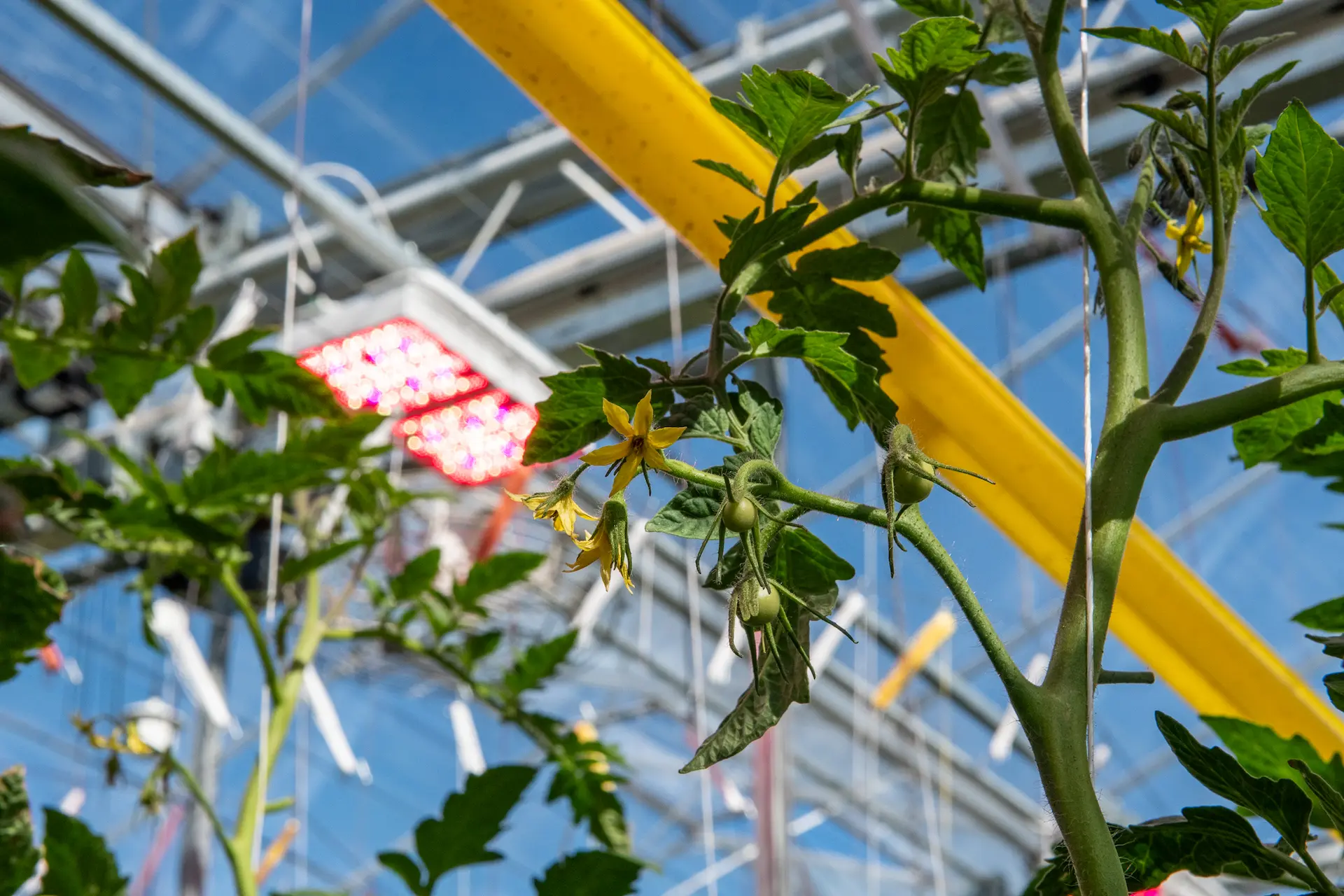
Research presented at the LED Tomato meeting showed that significant additional energy savings in LED-grown tomatoes are achievable.
LED in Tomatoes: Research Brings the Next Steps in Energy Savings Closer
How can tomato growers further reduce energy consumption under LED lighting without compromising crop performance and fruit quality? This question was central during the LED Tomato meeting held on 30 September at De Rank in De Lier. Approximately 80 growers, consultants, researchers, suppliers and other industry stakeholders gathered to review the results of multiple studies conducted within the Kas als Energiebron program during the past growing season.
Looking Beyond Technology
The overall conclusion from the various research projects was clear: additional energy savings remain possible. However, achieving these savings requires a more integrated approach to crop management. Factors such as lighting, temperature, transpiration, pollination and fruit quality are increasingly influencing one another and should be considered together rather than separately.
New Opportunities for Energy Reduction
Several studies focused on practical opportunities to lower energy use in greenhouse tomato production. Research presented by Delphy demonstrated that reducing transpiration and increasing the use of energy screens can contribute to energy savings. Air movement remains an important tool for maintaining a healthy greenhouse climate when implementing these strategies. Innovations in pollination are also creating new possibilities. By using pollination robots, growers may be able to keep energy screens closed for longer periods, further reducing energy demand while maintaining effective pollination. Anja Dieleman (Wageningen University & Research) demonstrated that tomato crops can cope well with light integration strategies. While a minimum light level remains essential, intelligently dimming lights rather than switching them off completely creates greater flexibility in electricity use.
Improving Light-Use Efficiency
A key topic during the evening program was understanding why Light Use Efficiency (LUE) often appears lower under LED lighting than under traditional SON-T systems. This is a key topic in research that is co-funded by Agrolux, carried out by Plant Lighting, Delphy Improvement Centre and Wageningen University & Research and intensively supervised by growers from the national tomato committee. Current research outcomes suggest that higher baseline respiration rates at elevated light intensities may play a role. Researchers are now evaluating how temperature management, far-red lighting and fertilization strategies could help improve efficiency.
Fruit Quality Remains a Priority
Uneven fruit coloration continues to be a challenge in certain LED lighting conditions. Research findings indicate that no single factor can fully explain the phenomenon. However, nutrient uptake, fruit temperature and lighting strategy all appear to influence crop responses and fruit quality outcomes. Additional benefits may also be achieved through positioning the grow pipe or an extra grow pipe at the right position higher in the crop.
Advancing Together
One of the strongest outcomes of the LED Tomato meeting was the combination of multiple research disciplines into a single discussion. Studies focusing on transpiration, pollination, light management, crop performance and fruit quality complemented one another and provided a broader understanding of how growers can continue improving energy efficiency. As LED adoption continues to increase throughout the tomato sector, future progress will depend not only on technological innovation but also on the intelligent integration of cultivation strategies.